Silicone vs Metal License Plate Frames: Which One Actually Lasts?
Silicone and metal frames fail for opposite reasons. Here's a material-first look at what actually happens to each after a year on the road — and which one fits which kind of driver.
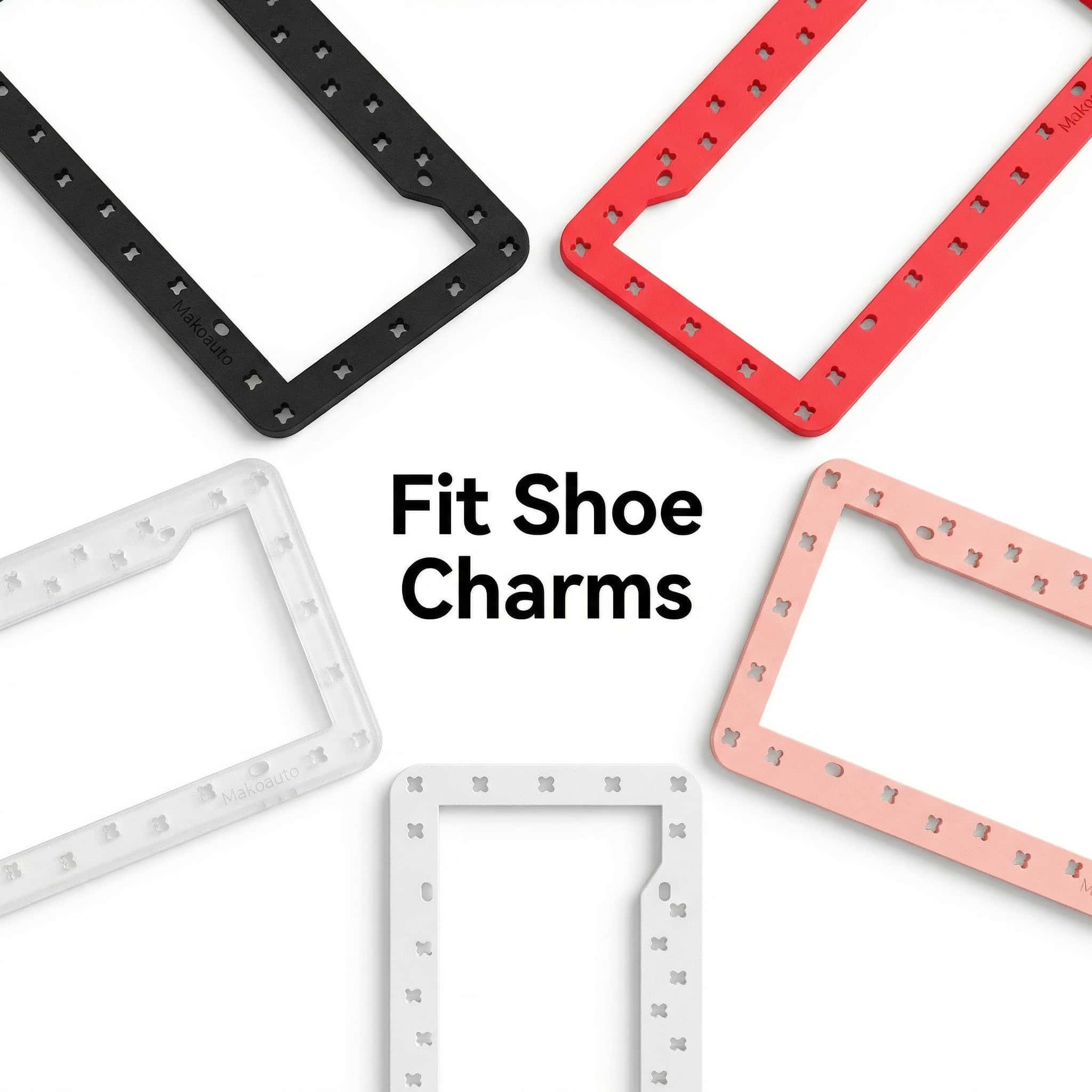
Pick any license plate frame on Amazon and it's either a flexible silicone/TPU body or a metal one (typically zinc alloy with a chrome or matte-black finish). They're not the same product at different prices — they're two different engineering answers to the same question, and they fail in opposite ways.
Starting with the materials
Most "silicone" license plate frames sold in the US are actually thermoplastic polyurethane (TPU) molded to around Shore A 85–95 hardness. TPU behaves like silicone to the hand but has significantly higher abrasion resistance and a broader service-temperature window (roughly −30 °C to 80 °C in automotive grades). Metal frames, by contrast, are almost always die-cast zinc alloy with a thin electroplated chrome or powder-coated surface — the structural stiffness comes from the alloy, the look comes from the coating.
That distinction matters because the two materials have different failure modes. TPU softens and can eventually yellow under extended UV exposure if it's not UV-stabilized. Electroplated zinc can develop galvanic corrosion at the screw-point contact when steel fasteners cut through the chrome layer — this is the familiar rust halo you see on older chrome frames after a few winters of road salt.
Side-by-side, at a glance
| Property | Silicone / TPU | Metal (zinc alloy) |
|---|---|---|
| Typical weight | 40–60 g | 200–320 g |
| Paint contact risk | Low (soft edge) | Moderate (rigid edge + vibration) |
| Corrosion risk | None (no metal body) | Possible at screw points |
| UV behavior | Can yellow if not UV-stabilized | Coating can chip/fade |
| Perceived finish | Soft, casual | Heavier, jewelry-like |
A quick disambiguation: frame vs cover
The phrase "silicone license plate frame with cover" shows up in search a lot, and it's worth separating two different products. A framewraps the four edges of the plate and leaves the numbers and stickers fully visible — legal in all 50 states when the frame doesn't overlap any state-required text. A cover(sometimes sold as a "silicone license plate cover" or "plate shield") is a transparent or tinted sheet that sits over the face of the plate. Clear covers are legal in many states; tinted, reflective, or photo-blocking covers are illegal in most of them. If you're comparing materials for longevity, you're almost always shopping for a frame — not a cover.
Installation differences
Both styles mount with two or four standard M6 screws into the bumper's existing plate-mount holes, so there's no drilling either way. The practical difference is weight-handling. A 250 g zinc frame benefits from a rubber backing gasket to keep the frame from walking against paint under road vibration; many metal frames ship without one and you'll want to add one. A 50 g TPU frame has enough built-in flex to act as its own vibration damper, so no gasket is needed. Removal is where TPU is noticeably easier: if a screw seizes in a metal frame's threaded insert, you can end up drilling it out; TPU frames have open hardware paths with stainless screws, so a seized fastener just unthreads cleanly.
When a silicone/TPU frame makes more sense
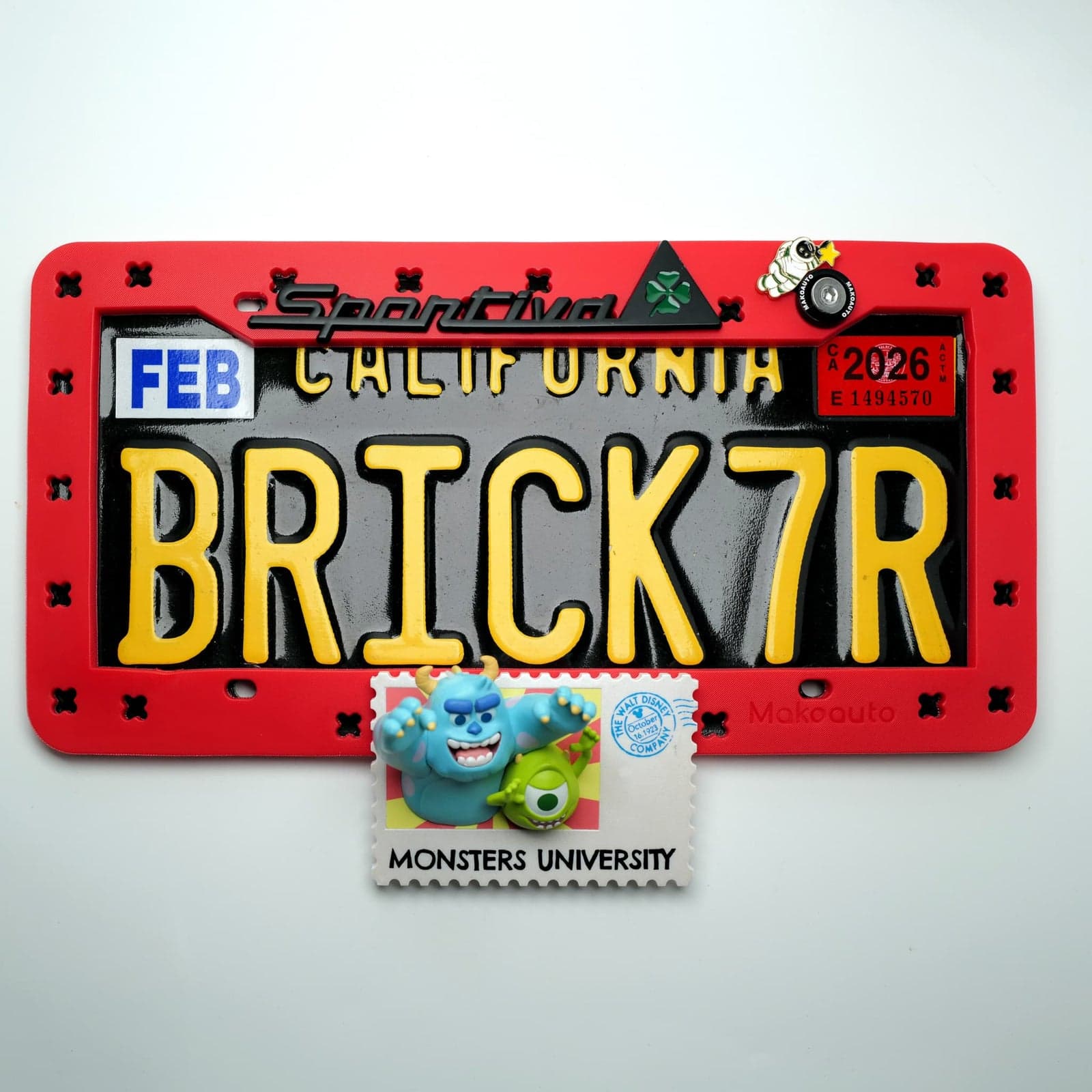
If your car sees salted winter roads, sits outside year-round, or carries a fresh paint job you don't want touched, TPU is the lower-risk pick. There's no metal-on-paint contact to worry about, no screw rusting in place, and the low mass means less vibration energy transferred to your bumper. The MakoAuto DIY frame is a straightforward example of this category.
When metal still wins
Metal pays off when finish quality is the priority — show cars, luxury coupes, or any setup where the frame reads as part of the car's jewelry. A well-made zinc frame with a quality chrome or satin finish will outshine any polymer under photo lighting. The trade-off is weight, corrosion management, and the fact that the design is fixed the day you buy it.
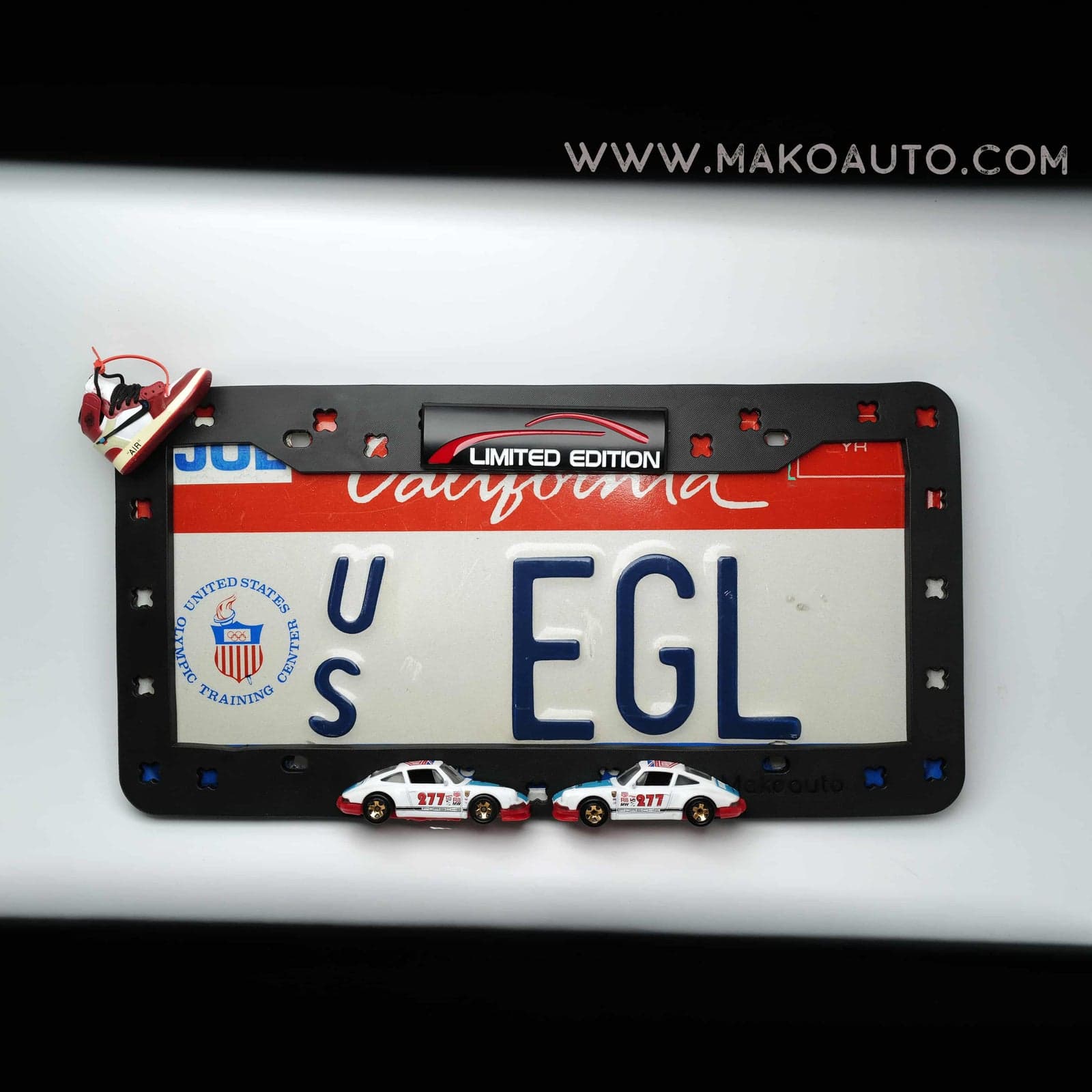
A middle-ground option is a TPU body paired with metal accents — e.g. the 277 Legacy bundle, which uses a TPU frame with 3D aluminum charms. You get the paint-safe soft contact surface and a real metal visual accent without welding the two failure modes together.
The honest takeaway
Neither material is universally better. TPU has fewer catastrophic failure modes in everyday US driving conditions; metal has a finish ceiling TPU can't match. If you'd describe your car as "daily driver" — go silicone/TPU. If you'd describe it as "garage queen" — metal is defensible. And if you want customization that survives either path, a TPU body with swappable charms is the only format that lets you change the look without changing the frame.