How to Pick the Best Silicone License Plate Frame: 5 Technical Checks
Ignore the star ratings. Here are the five technical checks — Shore hardness, hardware, UV stabilization, edge profile, and fitment — that actually decide whether a silicone license plate frame is good.

Most "best silicone license plate frame" reviews are a star-ranked list of Amazon listings. This isn't that. A frame that looks identical in a product photo can behave completely differently after six months outdoors — the difference is in specs most listings don't surface. Here are the five technical checks that actually predict how a silicone/TPU frame ages.
1. Shore A hardness (the goldilocks number)
Silicone-feel license plate frames are almost always TPU or a TPU/silicone blend. The useful spec to check is Shore A hardness, on a 0–100 scale. Below Shore A 75 the material is too soft — it'll flex under its own weight and droop at the corners after heat-soak. Above Shore A 95 it's stiff enough to lose the paint-protective flex that justified picking soft material in the first place. The sweet spot is Shore A 80–95. If a spec sheet doesn't list hardness, a quick fingernail test works — a good TPU frame compresses visibly under thumbnail pressure and rebounds instantly. Rebound in under a second is what you want.
2. Screw hardware (the silent failure mode)
The frame body is only half of it. A soft-TPU frame mounted with platedsteel screws rusts at the screw holes within one salted winter. Stainless steel (look for 304 or A2 grade) is the right answer — it's not much more expensive to produce but most budget frames skip it. Separately: check that the hardware kit includes a hex key and plastic spacer washers. Washers prevent the screw head from compressing too far into the soft TPU, which is the #2 reason these frames start looking cheap after a year. If a frame ships with a Phillips head screw only, assume corner-cutting elsewhere too.
3. UV stabilization (the one line you have to find)
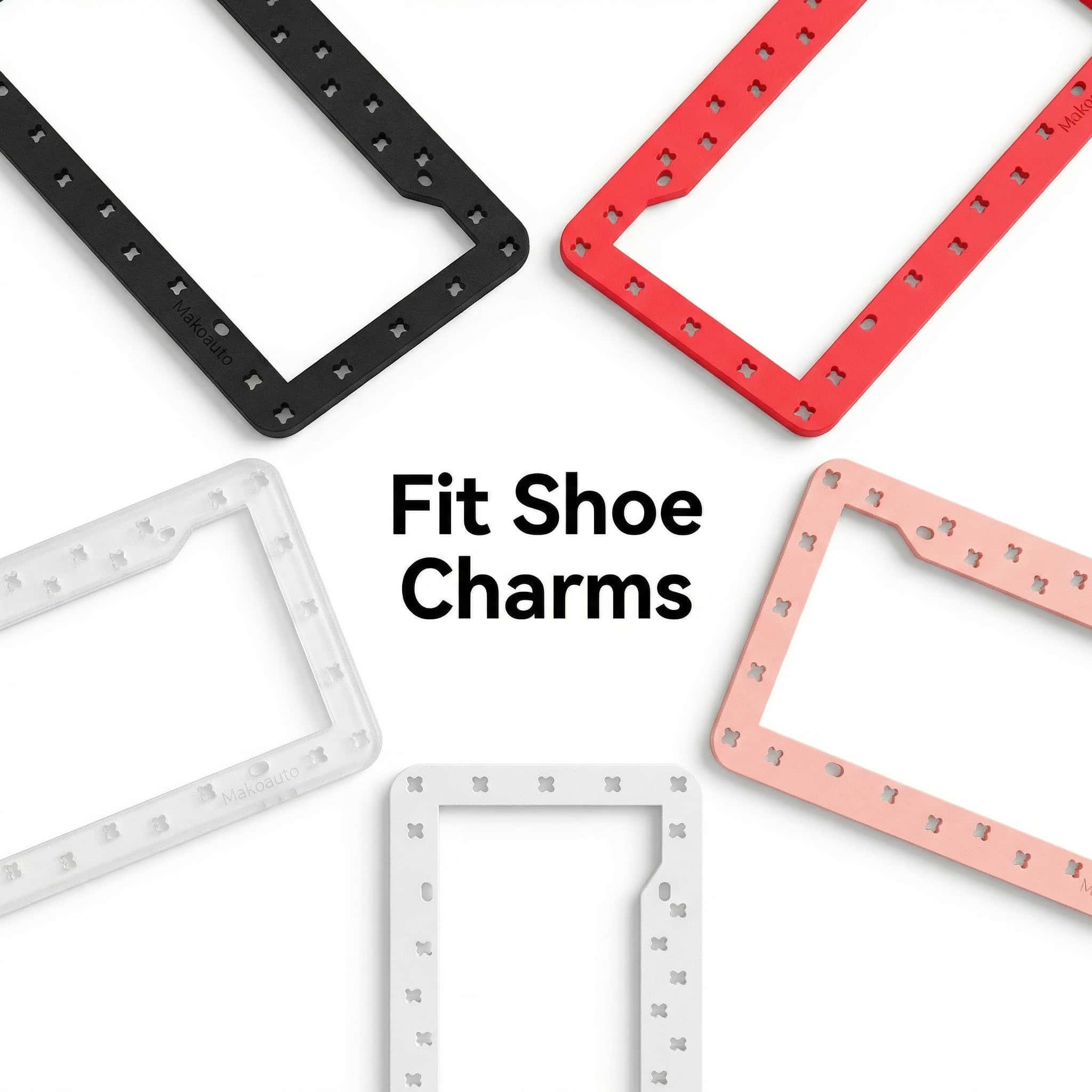
Unstabilized TPU yellows over time — Clear and Pearl White colorways show this first, Jet Black last. Real UV-stabilized TPU has a HALS(hindered amine light stabilizer) additive package baked into the resin. You can't eyeball this, but you can read for it: product copy should explicitly say "UV-stabilized," "UV-resistant TPU," or cite a weathering standard like ASTM G154. If the listing only says "durable material," that's a non-answer. Frames without UV stabilization will look tired by year 2.
4. Edge profile and drainage
Look at the back side. A good silicone frame has drainage channels cut into the underside so water can escape the gap between frame and bumper — otherwise you get a permanent wet ring that eventually discolors paint. Also check the outer edge profile: it should be rounded, not squared. A squared edge concentrates impact from stones and curb taps into a single line on your paint; a rounded edge distributes it across a wider area. This is a 10-second visual check that separates thought-through designs from generic OEM-copies.
5. Plate fit & customization path
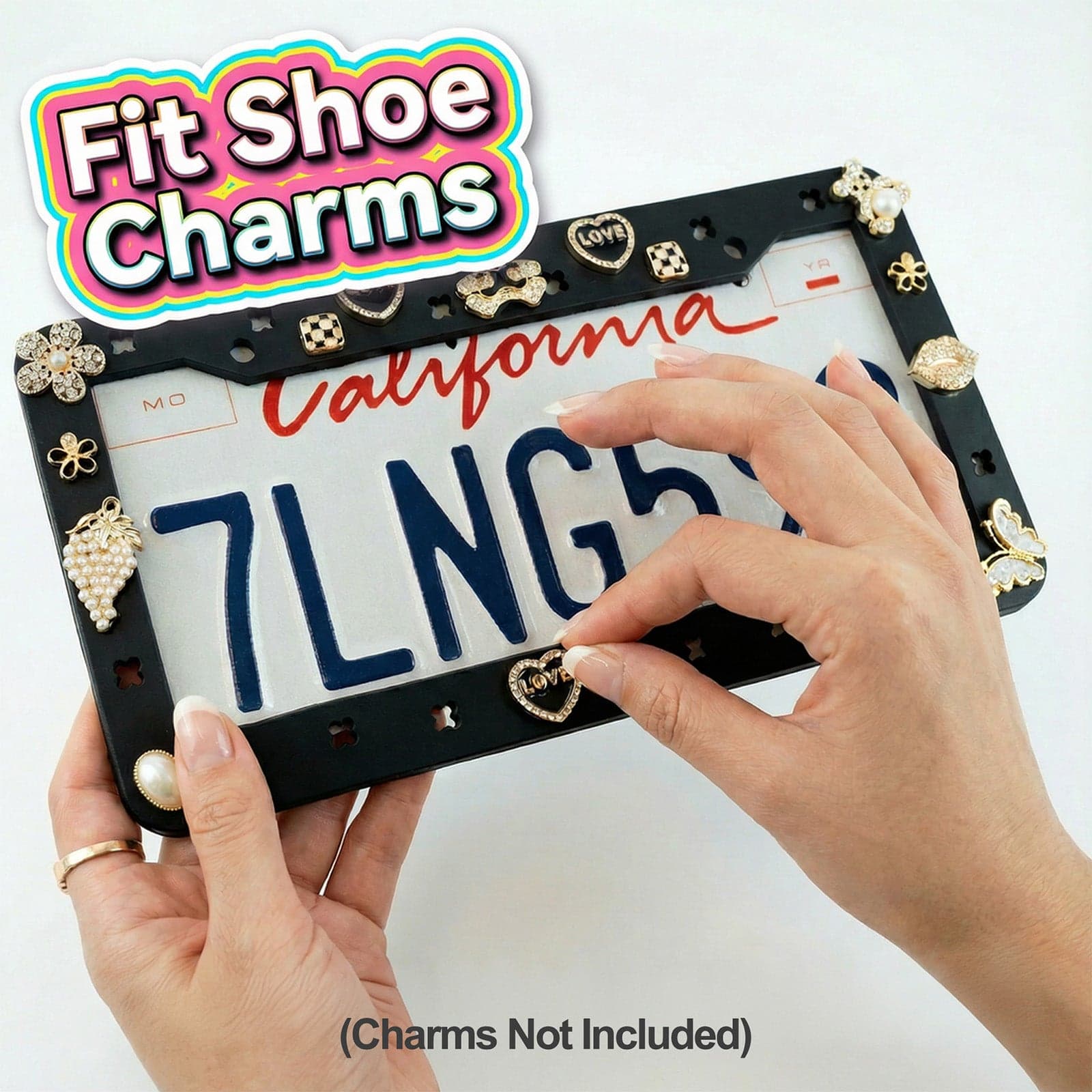
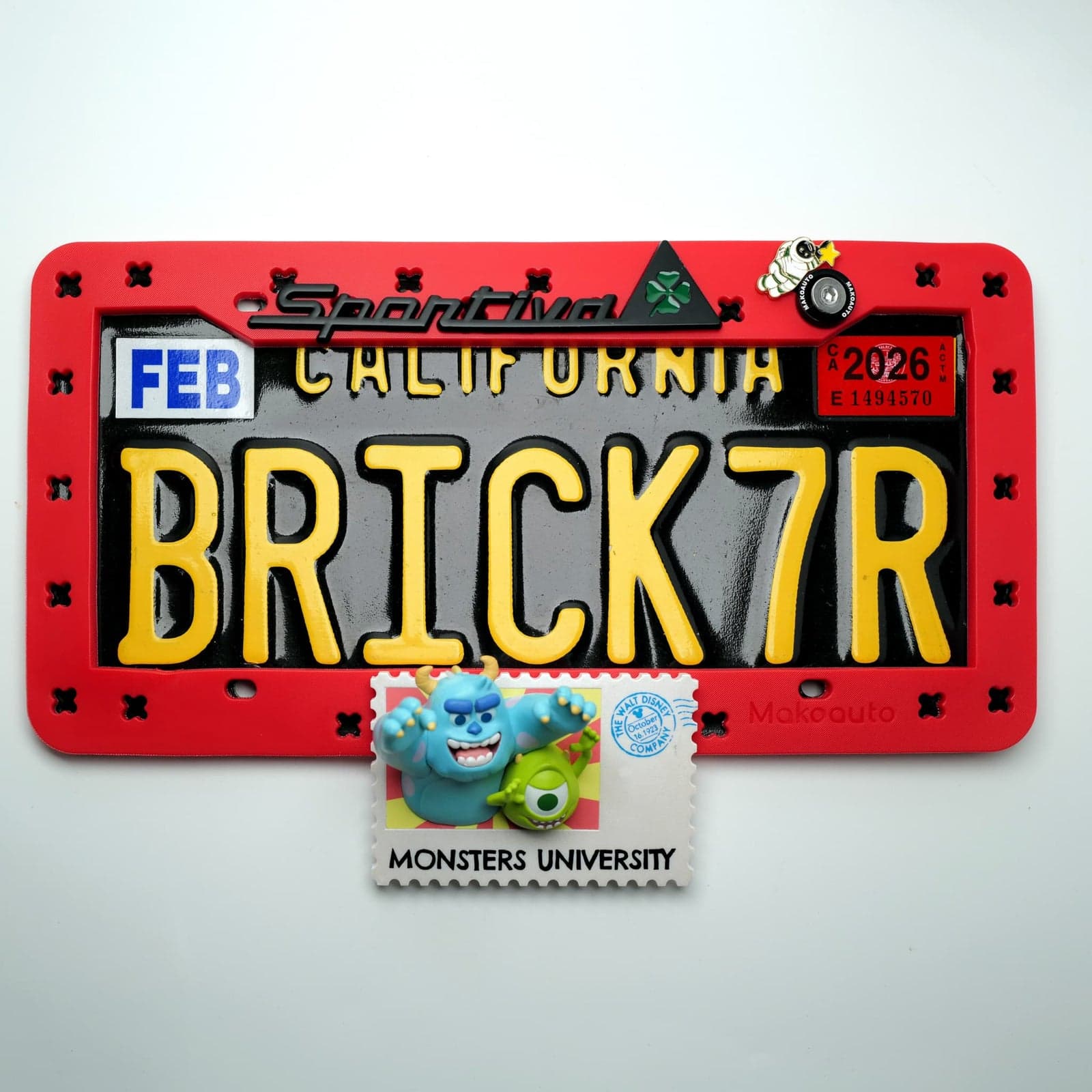
The US standard plate is 12 × 6 inches. A frame labeled "universal" should have an inner opening of at least 11.5 × 5.75 inches — any tighter and mounting holes won't line up on some state plates (California, for example, uses slightly wider screw patterns). Separately: think about how you'll change the look later. A frame that's just a flat rectangle gives you one shot at personality. Frames with charm slots (13mm cross-cuts, the same standard as Crocs Jibbitz) let you re-theme the frame without replacing it — the MakoAuto silicone collectionis an example of this category, but it's a pattern you'll start seeing more often.
A quick scoring framework
Rate each check 1/0 (pass/fail). A frame scoring 5/5 is a keeper. 4/5 is fine if the missing point is #5 (customization) and you don't mind a fixed design. 3/5 or below is where short-term regret lives — usually showing up as rust halos, yellowed corners, or a frame that slipped down the bumper over the course of a summer. The star rating on the listing tells you nothing about any of this.
The honest bottom line
The best silicone license plate frame for you is the one that checks Shore A hardness in the 80–95 band, ships with stainless hardware + washers, cites UV stabilization explicitly, has drainage plus rounded edges, and fits the standard US plate with a customization path you actually care about. That's five sentences of spec reading. It beats every star rating.